
Final Evaluation of SanMarkS – 'Scaling up Sanitation Market Systems in Bangladesh' project (Phase-2)
Location
Country-wide, Bangladesh
project period
May – August 2025
client
SDC – Embassy of Switzerland in Bangladesh
Services provided
Partner organisation
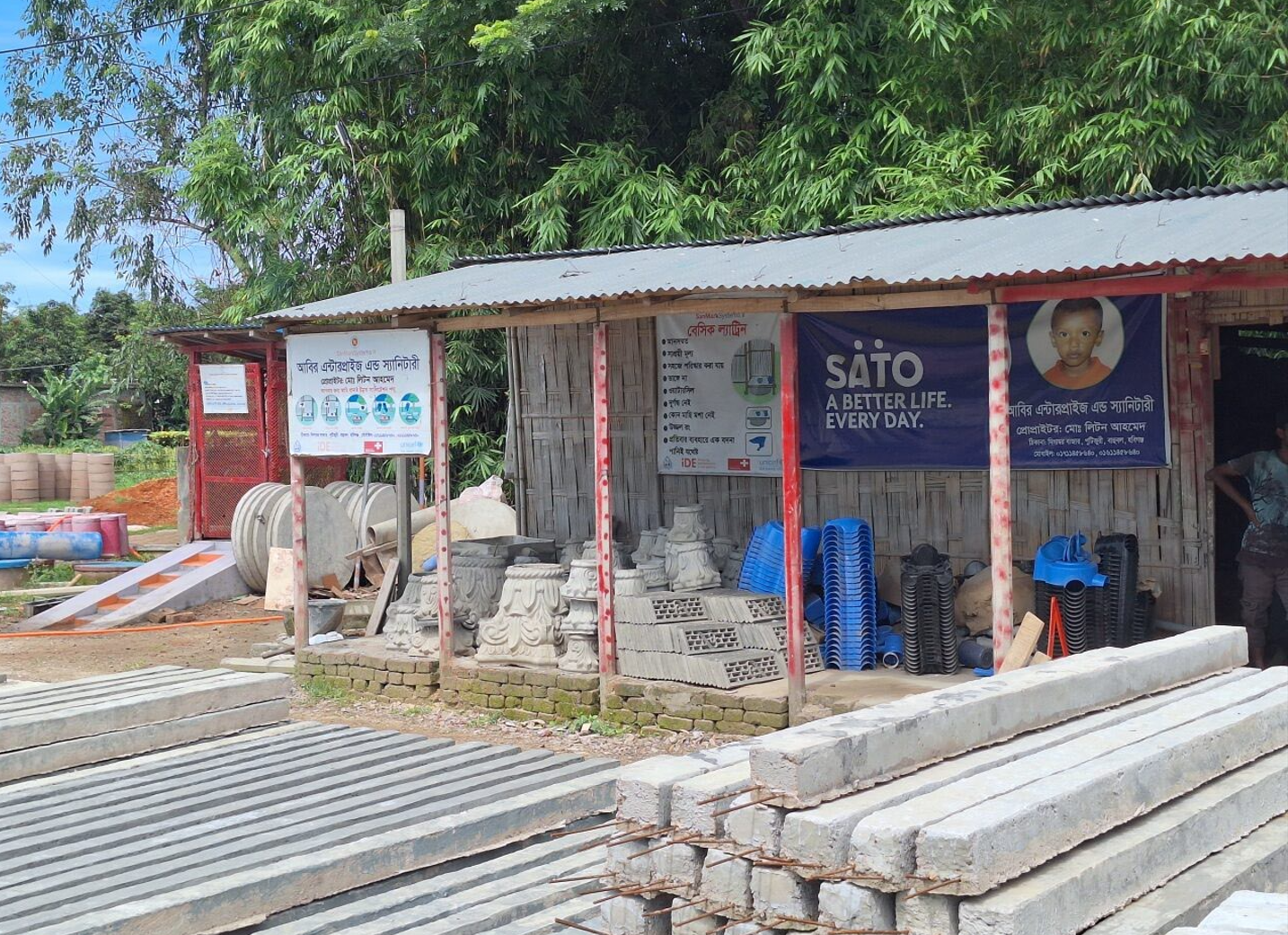
The SanMarkS (Scaling up Sanitation Market Systems) project Phase-2, jointly funded by the Swiss Agency for Development and Cooperation (SDC) and UNICEF, aimed to scale up market-based sanitation solutions across Bangladesh with a total investment of CHF 16 million (Switzerland contributing CHF 6.0 million). Building on the successful Phase-1 (2015-2019) pilot that demonstrated market-led approaches in 6 districts, Phase-2 (2019-2025) expanded to 35 districts targeting 4.5 million rural people in 1.2 million households. The project applied a market systems development approach focusing on i) strengthening supply chains, through engagement with private sector from national scale lead firms producing components for latrines, to local latrine producers, ii) improving consumer demand, iii) and creating enabling environment through engagement with the government at various levels for conducive policy frameworks and smart subsidy mechanisms. As SDC contribution to SanMarkS ends by November 2025, the project will continue until 2027 under Government of Bangladesh and UNICEF. Hence a comprehensive evaluation was needed to assess overall performance, capture lessons learned and provide strategic recommendations for sustaining impact beyond Swiss involvement.

Conducted by Skat Consulting in partnership with two national consultants, the end of phase evaluation of the SanMarkS Phase II (2019–2025) project served three core objectives:
- Assess the overall project performance using OECD DAC criteria — relevance, effectiveness, efficiency, impact, and sustainability.
- Evaluate the effectiveness of the project's theory of change and the national scaling strategy for developing sanitation market systems by leveraging the private sector. The focus is particularly set on the durability of market-led approaches and gathering evidence of systemic change in the sanitation sector.
- Extract lessons learned and provide recommendations for the exit strategy and future replication, including pathways for continued support to sanitation through market systems.
The evaluation methodology combined comprehensive desk review with extensive fieldwork including:
- Comprehensive desk review of project documents, progress reports, mid-term reviews, and sector analyses;
- Large range of interviews with SDC, UNICEF, Department of Public Health Engineering (DPHE), iDE teams (implementing partner), development partners and market actors;
- Field visits to 11 districts across six divisions for direct interaction with latrine users, latrine producers, sanitation business associations, and local authorities;
- Focus group discussions and household interviews to assess impact on user behaviour and access to improved sanitation;
- Market systems analysis using the adopt/adapt, expand/respond framework to identify signs of systemic change across supply chain actors;
- Cost-benefit analysis at household level including economic assessment of social benefits derived from improved sanitation adoption;
- Evaluation report compiling all the elements developed during the consultancy, including lessons learned and strategic recommendations for the continued implementation through UNICEF and the Government of Bangladesh.