
Facilitation of a Co-Creation Process towards a Regional Water Related Program in Central Asia
Location
Central Asia (Kyrgyzstan / Tajikistan / Uzbekistan)
project period
August 2025 - May 2026
client
SDC – Embassy of Switzerland in Uzbekistan
Services provided
Facilitation & Innovative Learning
Partner organisation
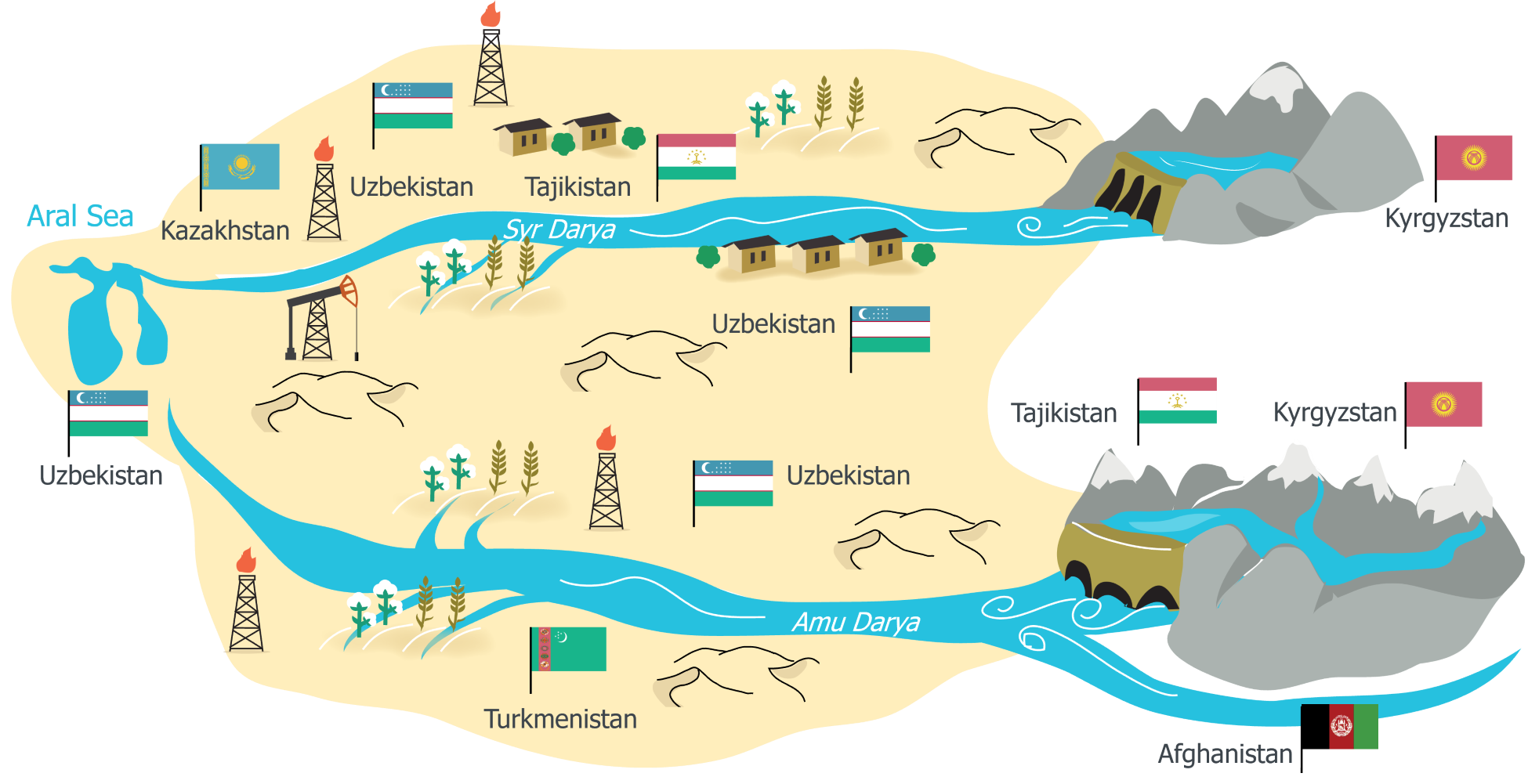
Switzerland has been promoting efficient water use, strengthening institutions, and fostering cross-border collaboration, particularly in its priority countries Kyrgyzstan, Tajikistan, and Uzbekistan in Central Asia for over two decades. The Swiss Cooperation Programme 2026-2029 will likely reaffirm Switzerland’s continued commitment to the region’s development pathways in the water domain. It will consolidate and build on important advances in the water sector made in the three countries while prioritizing high-impact initiatives that further Switzerland’s regional approach to address water management issues in Central Asia. A number of Swiss flagship initiatives in the region are coming to an end in 2026/2027 and a knowledge consolidation is required to serve as a foundation of the development of a new regional water-related program.


Skat Consulting is tasked to facilitate a co-creation process for the development of a new program in Central Asia that consolidates Swiss Water, Infrastructure and Climate Change Domain-wide efforts and identifies strategic and impactful partnerships and directions to advance regional cooperation on water management issues in the face of climate change while further building on strong national capacities.
- The stocktaking part focuses on SDC's designed flagship interventions that are coming to an end or have already been completed. The study is based on most relevant project/programme-related reports, reviews, evaluations and other documents. To make the study more effective, a series of key informant interviews is conducted. The results of the study are crucial as they are used not only to define future pathways and priority areas, but also to select initial participants in programme design and possibly implementation.
- The subsequent programme design process is based on collaborative co-creation, in which the selected project partners work together in a safe space towards ideation and solutions. The indicated approach behind this is a solution-based and user-centric method for finding answers and innovations to local and regional development challenges in iterative stages. The key steps are: a) mapping and engagement of partners, b) co-creation sessions, c) joint programme design, and d) documentation.