
People-powered governance: MĂ IMPLIC’s impact on local governance
The MĂ IMPLIC project helps Moldovan communities to improve their public services through engagement and capacity building.
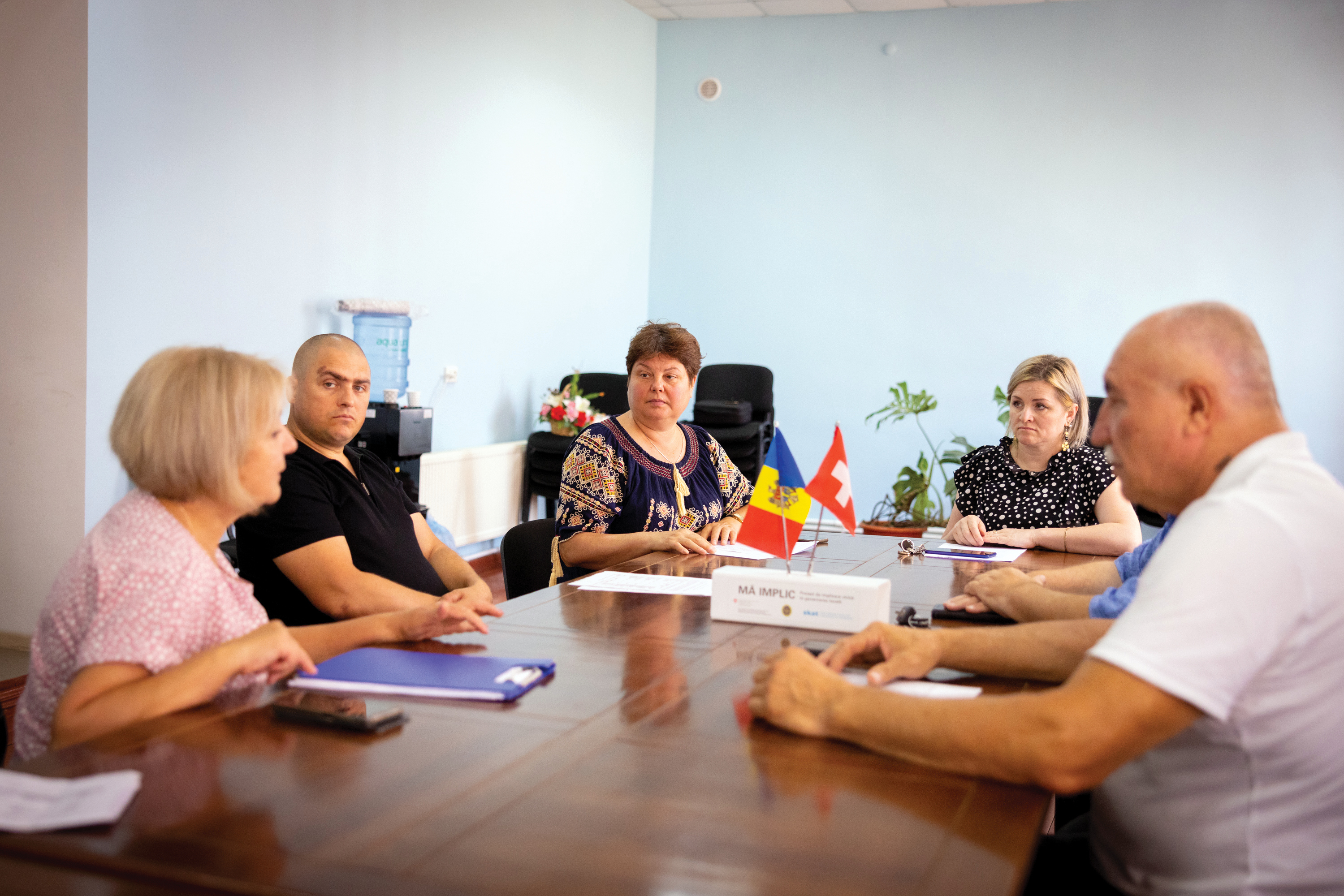
The MĂ IMPLIC project strengthens local governance in Moldova by improving access to quality public services and fostering active citizen participation. Through capacity building and collaborative service delivery, the project supports local authorities and communities to work together toward better living conditions and more inclusive governance.
Since gaining independence in 1991, Moldova has seen several attempts at decentralisation reforms. As a result of these, the country has a rather fragmented structure of local government, with approximately 898 local government units in a country of only 2.4 million inhabitants. While local governments nominally enjoy considerable autonomy, the challenge lies in the lack of local budget revenue to bring this autonomy to life, coupled with the absence of well-established public participation in local government. In this context, our MĂ IMPLIC project aims to empower communities where people actively contribute to the improvement of public services. The name of the project expresses this well: ‘MĂ IMPLIC’ means ‘I engage’.
Anatol Bucatca, you belong to SKAT’s local team and are the Public Service Manager at MĂ IMPLIC, which entered its second phase in 2023. What is your main priority?
Our priority is to build strong foundations with our 56 newly selected partner municipalities. Many are working in politically polarised environments and carry the legacy of decades of centralised planning. But what unites them is a clear desire to improve daily life for their residents through better public services like waste collection, street lighting, or water and sanitation.
How are you supporting them?
We’re helping our partner communities to strengthen their capacity to plan, manage, and deliver public services more effectively. Just as important is involving people in these processes. When citizens contribute to shaping solutions, services become more relevant, trusted, and sustainable. Through hands-on support, workshops, and peer learning, we help move communities away from inherited top-down models towards a more participatory and accountable local governance.
What motivates you?
Seeing communities come together around shared goals. Change takes time, but when people feel heard and have the tools to act, progress becomes possible.
In 2025, MĂ IMPLIC continued to strengthen the capacities of its 13 partner Local Public Administration (LPA) groups, covering 49 local government units across Moldova. The project supported the development and implementation of intercommunal public service models in areas such as solid waste management, water supply, and public transportation. At the same time, it invested in capacity building for local authorities through mentoring, training programmes, and peer exchange, while expanding citizen participation mechanisms that enable residents to actively contribute to local decision-making. The Energy Efficiency and Water Infrastructure components further support practical investments aimed at improving service quality, sustainability, and long-term resilience at community level.
While major infrastructure investments are currently in preparation, 2025 represented an important consolidation phase. Intercommunal partnerships have been formalised, service improvement plans were finalised, and local teams have built the technical and managerial capacities required to implement complex public service reforms. Together, these efforts reflect a gradual shift towards more coordinated, accountable, and citizen-oriented local governance.
MĂ IMPLIC is funded by the Swiss Agency for Development and Cooperation (SDC). The first project phase (2019–2023) included an additional component on energy efficiency (EnEff), extended to 2024. The second project phase (2023–2027) continues to build on these results and includes a component on water infrastructure (ApaNeff).


